
// DESIGNER ART TOYS & STEM ROBOTICS
Biomimetic Robot Toy Community: Collect, Build, Explore
The biomimetic robot toy community sits where designer collectibles meet living systems: wingbeats, articulated legs, expressive movement and the engineering that makes them convincing. For buyers, the appeal is bigger than another remote-controlled gadget. It is a character you can collect, a mechanism you can understand and, sometimes, a platform you can modify.
The smart purchase starts by separating those experiences. A display figure, a plush companion and a programmable flying robot serve different purposes—even when they share the same creature design. WOWLS connects character-led merchandise available now with a proposed world of biomimetic STEM companions. Knowing that distinction helps you choose something satisfying today without mistaking a future concept for a finished product.
Inside the Biomimetic Robot Toy Community
Biomimetic means borrowing principles from biology, not simply giving a machine animal-shaped bodywork. A winged character becomes a biomimetic robotics project when its mechanism explores something like flapping-wing lift. The useful question is not “Does it look alive?” but “Which biological behavior does it reproduce, and what can I learn from it?”
Collectors often prioritize silhouette, finish and character lore; builders care about linkages, actuators and control software. Educators look for understandable experiments and repeatable results. The strongest communities let those interests overlap through build notes, repair discussions and demonstrations. Look for people explaining why a mechanism failed—not just posting polished footage of its best five seconds.
Choose Your Entry Point Before Your Budget
As broad industry shopping ranges, simple mechanical creature kits often fall around –, introductory programmable robot kits around –, and more capable hobby robotics platforms can exceed. These are category-level guides, not WOWLS prices. Assembly requirements, included controllers, replacement parts and software access can matter more than the headline.
Designer collectibles follow a different value equation: materials, sculpting, production scale and presentation. Do not pay a robotics premium for a figure with no moving or programmable functions. Equally, do not judge an exposed educational mechanism by display-sculpture standards. For a younger learner, an approachable character plus a separate supervised building activity may be a better introduction than a fragile flying machine.

Why Flapping Wings Make an Interesting STEM Platform
An ornithopter generates flight through flapping wings. That makes it a compelling teaching tool: changing wing geometry, stiffness, stroke or balance can change how it moves. Unlike a decorative propeller-driven creature, the wing mechanism itself becomes the lesson, connecting aerodynamics with motor control, structures and energy use.
There are practical trade-offs. Lightweight wings and linkages need careful handling; repairs and battery access deserve attention before purchase. Ask whether a product actually flies, requires assembly or only demonstrates movement on a stand. Flight space, supervision and local rules also matter. Quietness and agility depend on the specific design and conditions, so judge demonstrated performance rather than treating biomimicry as an automatic advantage.

WOWLS: A Collectible Today, a Robotics Concept Ahead
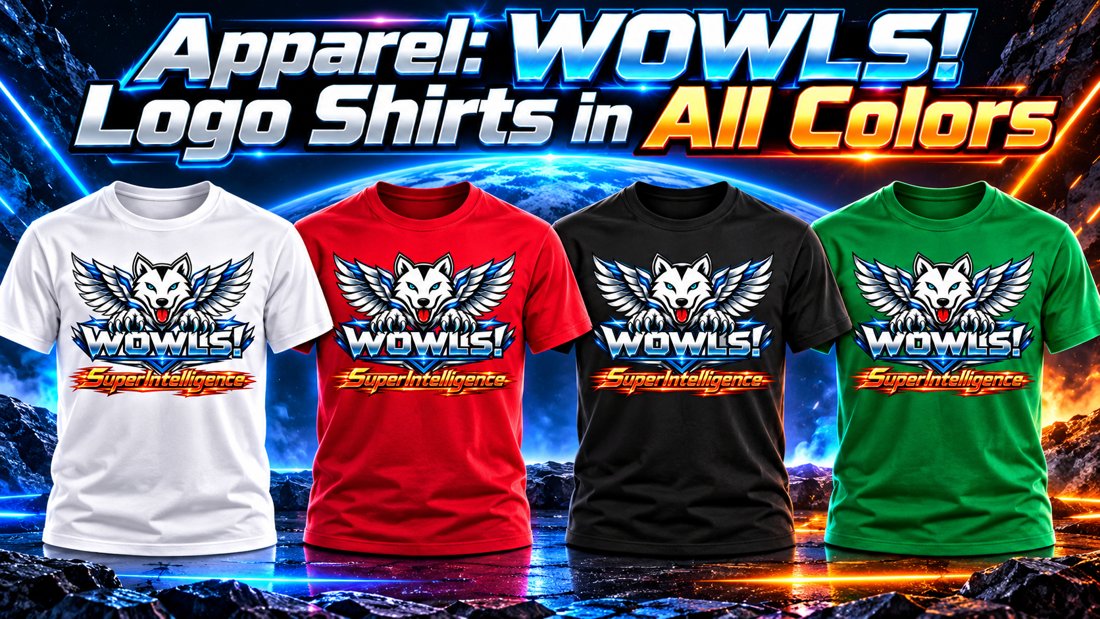
WOWLS—“Part Wolf. Part Owl. All WOW.”—offers a character-first entry through its Shop. The WOWL Plush Pup pairs gray-and-white fur, bright blue eyes and oversized paws with wings and a gold-colored pendant. The Aero Guardian Figurine and Winged Wolf Wood-Look Sculpture offer display-focused alternatives. These are merchandise choices, not programmable robots; visit /shop for current pricing and shipping calculations.
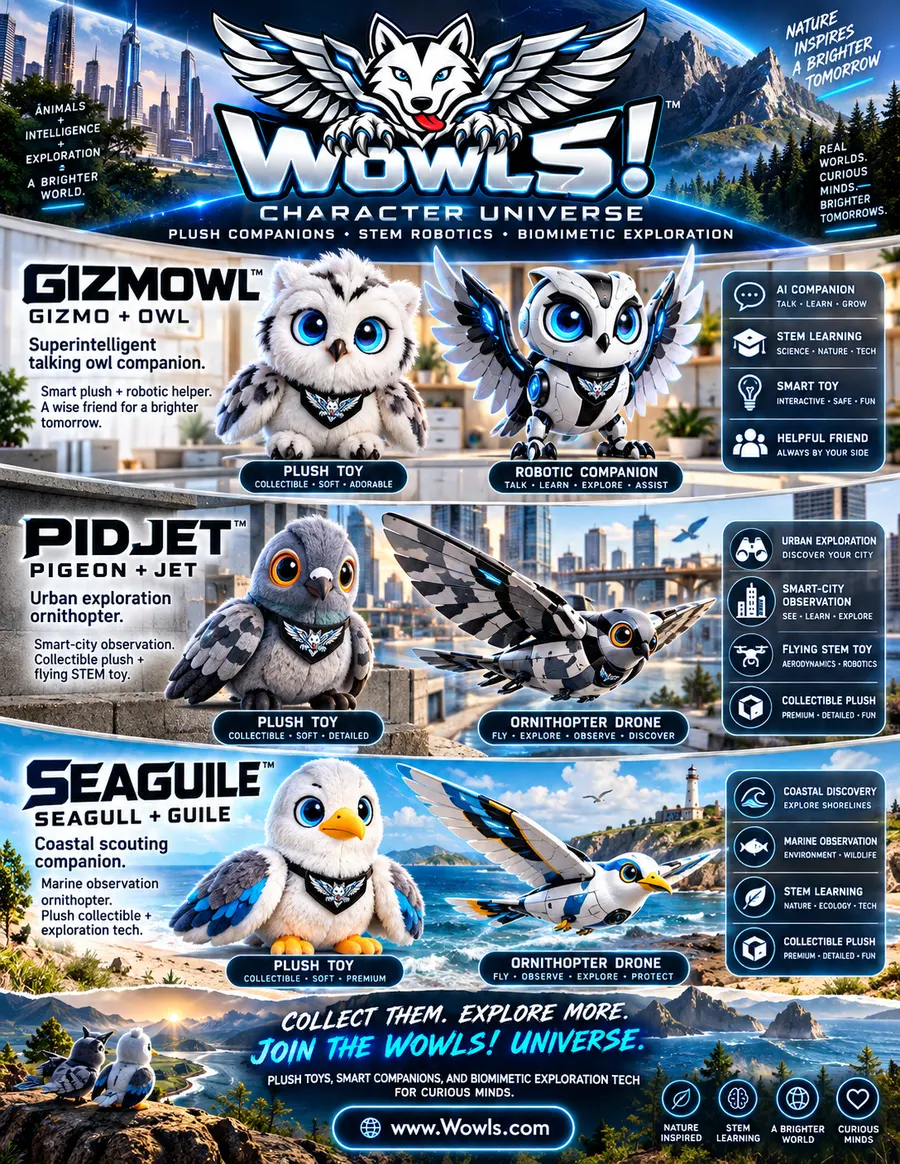
The Character Universe takes that identity into a proposed STEM direction. GIZMOWL, PIDJET and SEAGUILE are concepts for premium plush companions paired with biomimetic ornithopter drones intended to teach aerodynamics and robotics. They are not available robotics products. Explore /char, then register interest through /contact for the STEM ornithopter waitlist.
Let the Character Travel Beyond the Shelf
A good character universe gives collectors several ways to participate without requiring electronics expertise. WOWLS Shop options include the Cosmic Jigsaw Puzzle, Orbit Tour Poster and Cosmic Odyssey Capsule tee. A puzzle creates a shared activity; artwork or streetwear carries the visual identity into everyday life. None needs an app or a replacement actuator to remain enjoyable.
For families, the free WOWLS coloring book introduces space-travel themes through a low-pressure creative activity. Pair it with a discussion about how wings generate lift or why spacecraft work differently. Start with the experience you actually want—collecting, making or learning—and let deeper robotics involvement follow genuine curiosity.
How do I start exploring biomimetic robot toys without overspending?
Choose one goal first: collecting a character, learning mechanics or programming movement. For robotics, favor clear instructions, accessible replacement parts and demonstrations of the actual product over ambitious feature claims. Check whether batteries, tools and controllers are included. If character collecting is your priority, WOWLS merchandise is available through /shop at current listed prices. Its proposed plush-and-ornithopter pairings belong to the Character Universe concept program; explore /char and register interest through /contact rather than treating them as ready-to-ship robots.