
// DESIGNER ART TOYS & STEM ROBOTICS
Designer Art Toy Display Case: A Collector’s Buying Guide
A designer art toy display case should do more than keep dust off a collectible. It should frame the silhouette, protect delicate details and make a small sculpture feel intentional in your room. The best purchase starts with the object—not the cabinet. Measure its widest pose, tallest feature and base before choosing materials or lighting.
For winged characters, that means accounting for feathers, ears and outstretched forms rather than body height alone. WOWLS brings that sculptural language to the Aero Guardian Figurine, Winged Wolf Wood-Look Sculpture and WOWL Plush Pup, available through /shop. Check current product dimensions and pricing there before matching a piece to its enclosure.
Size a Designer Art Toy Display Case Around the Silhouette
Start with usable internal dimensions. Exterior measurements can conceal thick bases, frames and door hardware that steal valuable room. Leave clearance around projecting details so you can lift the collectible out without scraping it. For a dramatic winged pose, width and depth may matter more than height.
A single-object cube gives one piece visual authority; a cabinet suits a growing collection. Adjustable shelves are useful when figurines share space with plush or small robotics projects. Before ordering, confirm the opening dimensions, shelf load rating and whether the door can swing clear in its intended location. A case that fits the object but blocks access is still the wrong case.

Acrylic or Glass? Choose for the Location
Acrylic is light and practical for desktop enclosures, especially when you want an almost invisible surround. Its trade-off is scratch sensitivity: use a clean microfiber cloth and a cleaner specifically approved for acrylic. Avoid dry dusting gritty surfaces or using household solvents without checking compatibility.
Glass generally resists everyday surface scratches better, but it adds weight and can break. For larger cabinets, look for clearly specified safety glazing and follow the anchoring instructions. Neither ordinary glass nor clear acrylic should automatically be treated as UV protection. If light filtering matters, ask for the material’s documented specification—and keep painted collectibles away from direct sunlight regardless.

Spend on Protection Before Display Effects
As broad retail shopping ranges, small stock acrylic cases often cost roughly –, larger tabletop enclosures around –, and freestanding glass cabinets about –or more. Custom dimensions, specialty glazing and integrated lighting can push costs higher. These are general industry ranges, not WOWLS merchandise prices or quotes.
The strongest upgrades are usually a stable base, reliable door closure and well-fitting joints. A close-fitting enclosure reduces dust; it is not necessarily airtight or humidity-controlled. Check assembly requirements, replacement-panel availability and the seller’s damage policy. Large clear panels need careful packaging, and a bargain becomes less appealing if a scratched panel cannot be replaced.

Light the Character, Not the Reflection
Small LED fixtures can reveal sculpted textures without the heat associated with older lighting types, but drivers and enclosed fittings can still warm up. Keep lighting equipment away from plush and painted surfaces, follow its installation guidance and avoid cramming electrical components into an unventilated base.
Use a restrained backdrop and test the viewing angle before fixing lights in place. Side lighting can emphasize wings; a light directly in front often creates glare. The gray-and-white WOWL Plush Pup, with blue eyes and a gold-colored pendant, offers a softer centerpiece than a figurine. Give its oversized paws room rather than compressing it against a panel.

Separate Collectible Display From Active STEM Play
A display enclosure is a storage setting, not a flight arena. Any moving-wing robotics project needs clearance and operation according to its instructions, outside the collectible case. Remove batteries for longer storage when the device manufacturer recommends it, and never assume a decorative cabinet is suitable for charging.
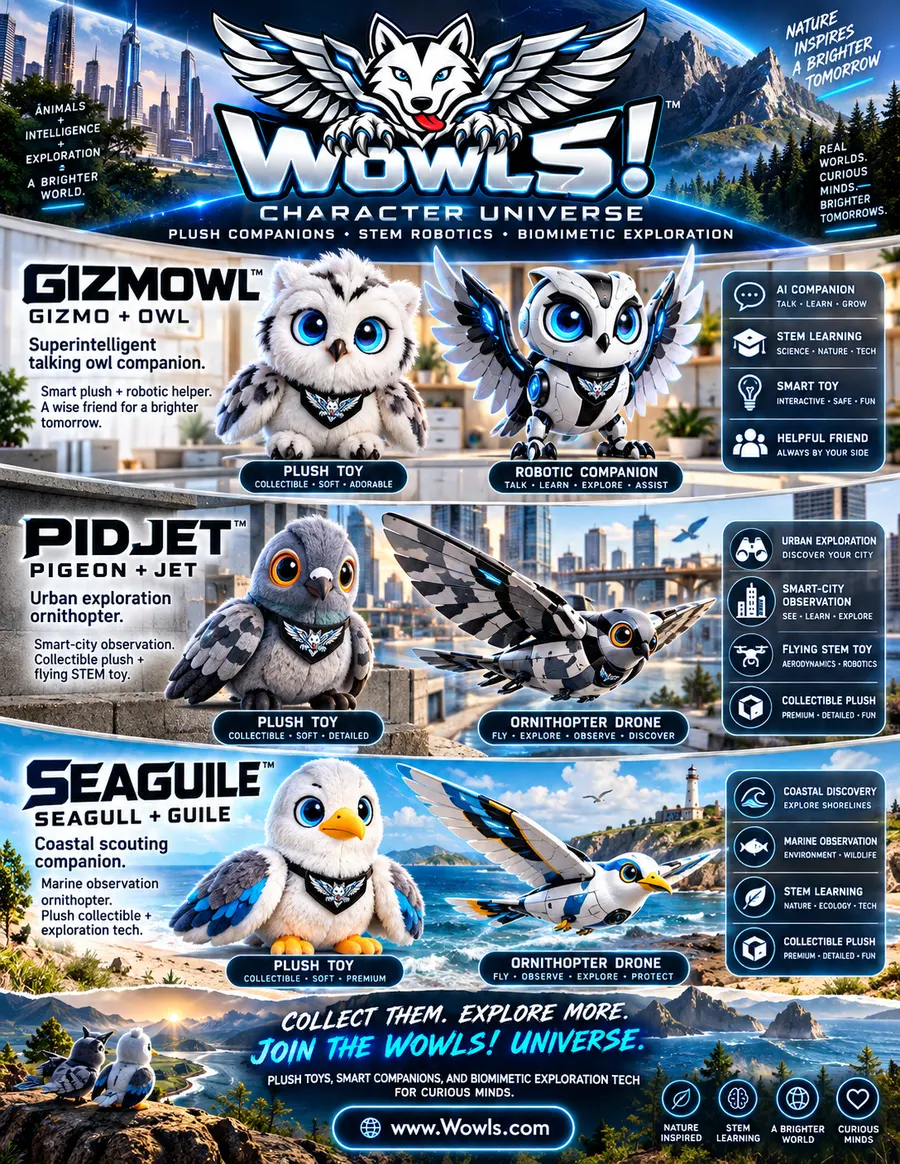
That distinction fits the WOWLS Character Universe: GIZMOWL, PIDJET and SEAGUILE are concepts pairing plush companions with biomimetic, flapping-wing STEM drones. They are not available finished robotics products; register interest through /contact. For something to display now, browse /shop, then explore /char and /legend for the character direction and fictional Siberian origin story behind the winged-wolf identity.

What is the best display case for designer art toys?
The best case fits the collectible’s full silhouette, provides easy access and suits its location. A small acrylic enclosure works well for a lightweight desktop display; a stable glass cabinet with adjustable shelves is better for a growing collection. Prioritize internal dimensions, dust-reducing joints and secure placement before lighting effects. Keep collectibles out of direct sunlight, verify any UV-filtering claims and check care instructions for painted or fabric surfaces. For WOWLS pieces, confirm product dimensions and current pricing in /shop before buying an enclosure.