
// DESIGNER ART TOYS & STEM ROBOTICS
Collectible Robot Toy Display Case: A Smarter Buying Guide
A collectible robot toy display case should do more than keep fingerprints off a favorite figure. It needs to accommodate antennae, articulated limbs and accessories without making the collection look cramped. For working STEM robots, it also needs to respect battery care and access. Start with the largest posed object—not its packaging dimensions—and decide whether you are building a gallery, a play-and-learn station or both.
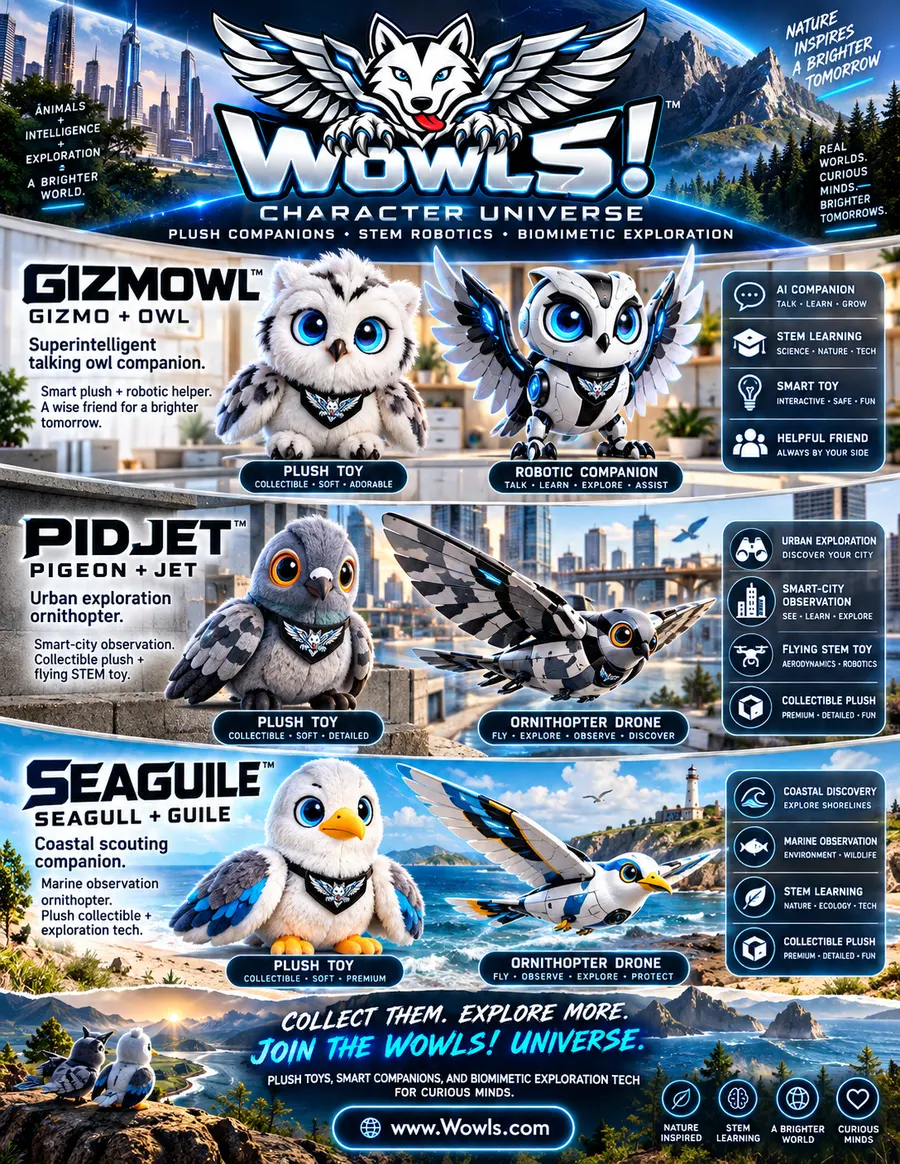
That distinction matters when mixing designer art toys with robotics-inspired collectibles. A sealed pedestal suits a static sculpture; an easily opened cabinet makes more sense for something handled regularly. WOWLS! brings winged-wolf character design into this territory through available shop collectibles and a separate concept program pairing plush characters with educational flapping-wing drones.
Size Your Collectible Robot Toy Display Case Around the Pose
Measure height, width and depth with the figure in its intended display pose, including weapons, wings, cables and the base. Leave a few inches of visual breathing room where practical, especially above antennae and around extended limbs. Check internal dimensions: external measurements include panels, frames and door hardware that can substantially reduce usable space.
For a growing collection, adjustable shelves usually beat a tightly fitted stack of cubes. Check each shelf’s rated load and how that load must be distributed. Dense metal figures and stone-effect bases can be surprisingly heavy. Tall cabinets should be secured according to their installation instructions, particularly in homes with children or pets.

Acrylic, Glass or an Open Shelf?
Acrylic is lightweight and convenient for desktop covers, but it scratches more readily than glass. Clean it with a soft cloth and a product approved for the material; aggressive household cleaners can damage the surface. Glass offers good scratch resistance and clear viewing, although larger cabinets become heavy. Where impact risk matters, look for appropriately specified safety glazing.
An open shelf offers immediate access but demands more frequent dusting around joints and textured surfaces. Enclosed cases reduce that maintenance; they are not automatically airtight. Inspect door gaps, hinges and seals rather than trusting the word “dustproof.” Mirrored backs can reveal rear detailing, but plain backgrounds often make complex robot silhouettes easier to read.

Spend on Fit Before Lighting Effects
As broad industry shopping ranges in US dollars, small acrylic covers often fall around –, larger tabletop enclosures around –, and freestanding glass cabinets roughly –or more. Custom dimensions, premium joinery and integrated lighting can push costs much higher. These are planning ranges, not WOWLS! prices; compare delivery, assembly and mounting requirements before choosing.
Diffuse LED lighting generally flatters painted figures better than a harsh spotlight. Position strips so individual emitters do not reflect directly into the viewing angle, and keep drivers and wiring accessible. Avoid direct sunlight, which can fade pigments and heat an enclosure. “UV-resistant” is not a universal promise: ask which panels provide protection and what the manufacturer actually specifies.

Working Robots Need a Different Routine
A display enclosure is not a charging station or flight arena. Follow the device manufacturer’s instructions for battery storage and charging, switch equipment off before storing it, and remove batteries only where instructed. Do not charge a robot inside a sealed case. Leave enough access to inspect batteries and retrieve the device without pulling on delicate mechanisms.
For flapping-wing robotics, allow clearance for the complete wing structure and support the body rather than resting weight on membranes or linkages. WOWLS! Character Universe concepts—GIZMOWL, PIDJET and SEAGUILE—pair premium plush companions with biomimetic ornithopter STEM drones intended to teach aerodynamics and robotics. These remain concepts: register interest through /contact rather than treating them as available flight-ready toys.

Build a WOWLS! Shelf With Available Collectibles
For pieces available now, start at /shop with the Aero Guardian Figurine or Winged Wolf Wood-Look Sculpture. The gray-and-white WOWL Plush Pup adds a softer counterpoint with bright blue eyes, oversized paws and a gold-colored pendant. Confirm dimensions and care requirements before ordering a separate enclosure; a plush companion needs different support and space than a rigid figure.
Keep the composition selective: one focal collectible, a quieter companion and a consistent background usually read better than every accessory competing for attention. An Orbit Tour Poster can extend the theme outside the cabinet. Visit /shop for current merchandise pricing and shipping calculations. Choose a third-party case around the pieces you own, not around an assumed future product size.

What is the best display case for collectible robot toys?
The best case fits the robot’s fully posed dimensions, supports its weight and opens without risking delicate parts. Acrylic covers work well for lightweight desktop displays; glass cabinets suit larger collections and adjustable layouts. Prioritize reliable shelf supports, manageable door gaps and indirect lighting over elaborate effects. For working robots, use the enclosure for storage and presentation—not charging or operation. Measure wings, antennae and accessories before buying, and check the manufacturer’s battery-care instructions.