
// DESIGNER ART TOYS & STEM ROBOTICS
Bionic Robot Companion Custom: Art Toys Meet STEM
Searching for “bionic robot companion custom” brings together three different purchases: a character you collect, a robot you program, and a bespoke machine built around your imagination. They can share a striking silhouette, but their capabilities—and costs—are worlds apart. Start with the experience you want: display, comfort, interactive play or hands-on engineering.
The strongest designs make personality and mechanism work together. A wing should communicate character, demonstrate aerodynamics or actually generate lift—not merely decorate a vague promise of intelligence. WOWLS approaches this territory through its winged-wolf identity, available plush and art objects, and a proposed character universe pairing plush companions with biomimetic STEM drones.
Bionic Robot Companion Custom: Choose the Experience
“Bionic” usually signals inspiration from living systems: articulated limbs, responsive eyes, flapping wings or animal-like movement. It does not automatically mean artificial intelligence, autonomous navigation or emotional understanding. For a commercial purchase, translate the label into observable actions. Does the companion respond to touch, follow programmed movements, detect obstacles or simply play recorded sounds?
A designer art toy prioritizes sculpt, finish and character. A plush companion offers softness and tactile appeal. A STEM robot adds mechanisms, sensors and opportunities to experiment. A bespoke robotic character combines disciplines, often requiring separate work on industrial design, electronics and software. Decide which layer matters most before paying for customization.
Customization Has More Than One Price Tag
Cosmetic customization might mean a colorway, removable outfit or personalized display base. Functional customization changes movement, controls or sensors. Those are very different jobs. A new paint scheme should not require an electronics redesign; adding powered wings might require new motors, batteries, structural parts and extensive testing.
As broad industry budgeting ranges—not WOWLS prices—small designer collectibles and introductory robotics products can span tens to several hundred dollars. Commissioned finishes or original sculpts can run into hundreds or thousands, while bespoke powered prototypes can reach several thousand dollars or more. Ask whether a quote includes design revisions, programming, charging equipment and repairs. A beautiful prototype without replacement parts can become an expensive static sculpture.

Where Animal-Inspired Robotics Becomes Useful
Biomimetic robotics becomes compelling when biology provides a practical lesson. A flapping-wing mechanism can demonstrate lift, thrust, linkages and motor control in one visible system. Changing wing geometry or stroke rate gives a learner a concrete question to investigate rather than another button to press.
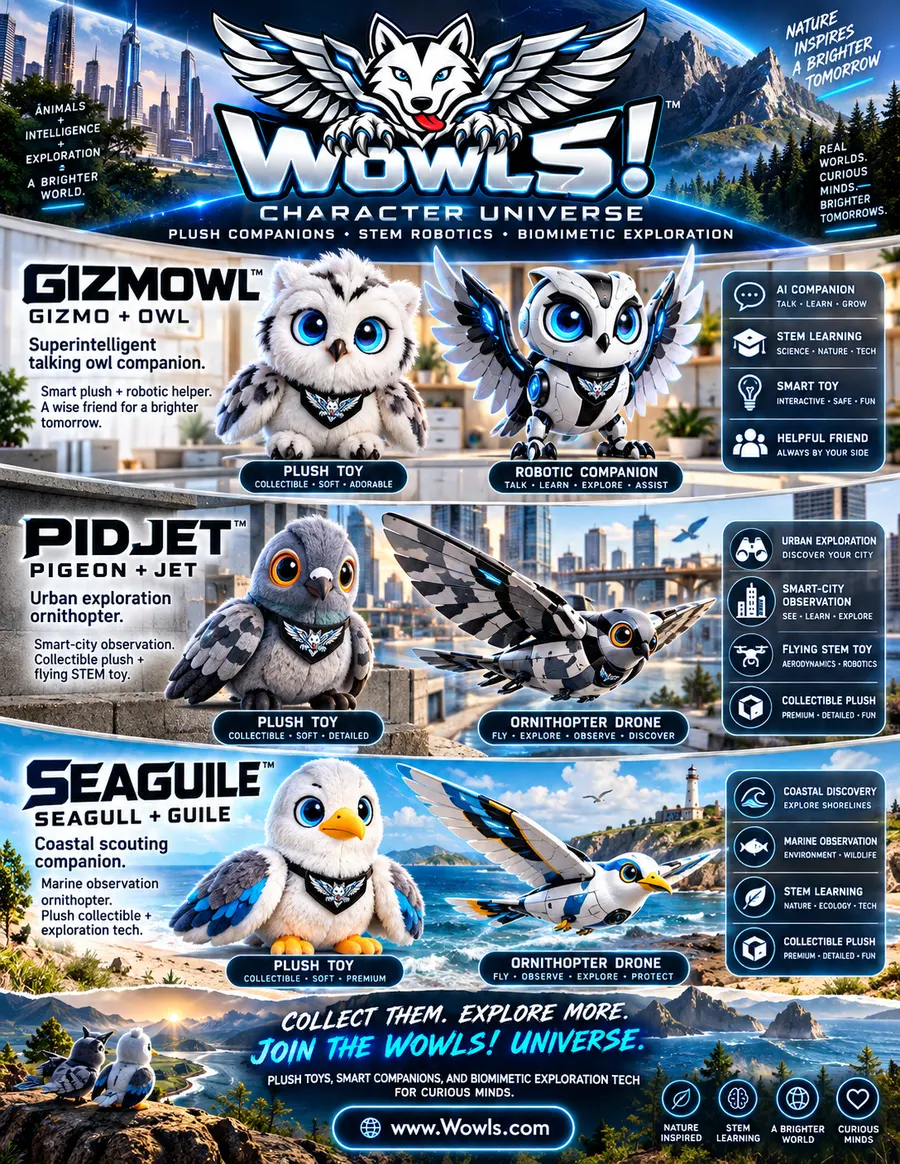
WOWLS’ proposed Character Universe introduces GIZMOWL, PIDJET and SEAGUILE as premium plush companions paired with biomimetic ornithopter STEM drones. The concept connects character storytelling with aerodynamics and robotics, drawing on Siberian lore and aerospace design. These character-and-drone pairings are concepts for registering interest, not currently available robotic companions. Noise, agility and flight behavior should be judged on a specific demonstrated design rather than assumed from the flapping-wing format.

The Details That Make a Companion Livable
For any powered companion, look beyond the demonstration video. Motor noise, charging time, access to the battery and the availability of spare joints determine whether it stays enjoyable. For connected models, establish which functions work offline, whether a subscription is required and how microphones or cameras can be disabled. Custom artwork does not compensate for an app that stops working.
Match the mechanism to the user and setting. Exposed linkages can pinch; small detachable pieces need age-appropriate handling; flying models require suitable space and supervision. If building is the point, favor accessible instructions and serviceable components. If companionship is the point, a well-made plush may deliver more daily enjoyment than a complicated machine that spends most of its time charging.
Start With the Character, Then Build the World
For an available WOWLS companion, start in the Shop with the WOWL Plush Pup: a gray-and-white winged wolf with bright blue eyes, oversized paws and a gold-colored pendant. It is a plush, not a robot. The Aero Guardian Figurine and Winged Wolf Wood-Look Sculpture offer display-focused alternatives, while the WOWLS LED Night Light brings the character into a room.
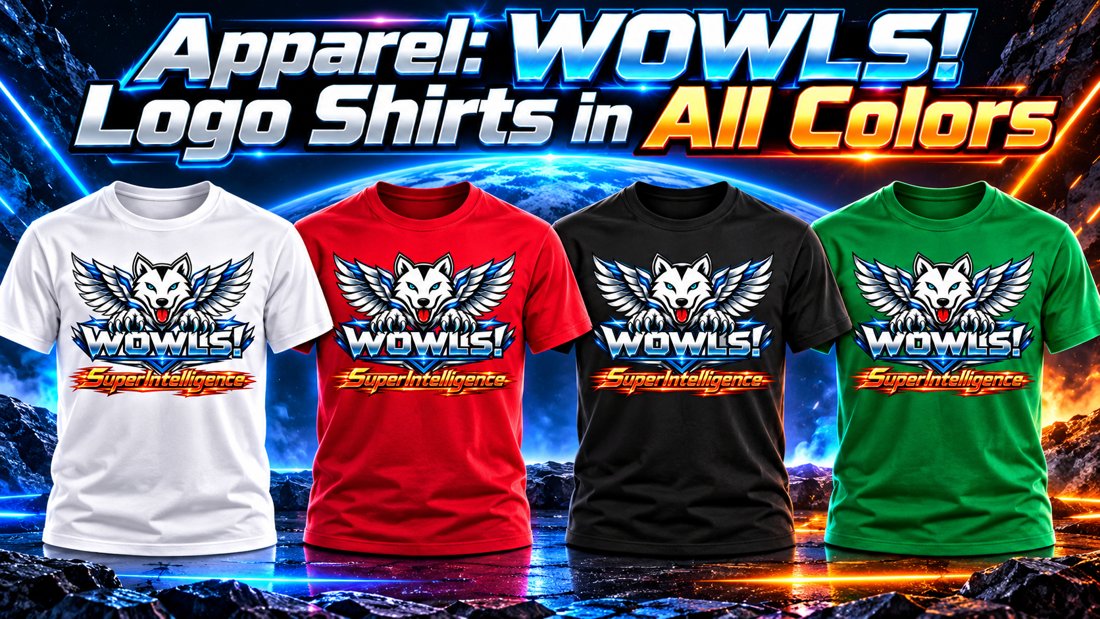
Extend the same visual world through logo tees or the Cosmic Odyssey Capsule tee, featuring a WOWL soaring toward a glowing planet with spacecraft streaking past. Visit /shop for current pricing and shipping calculations. For the proposed STEM ornithopter program, explore /char and register interest through /contact. Keep the distinction clear: merchandise is available now; the robotic learning experience remains a concept.

Can I buy a custom bionic robot companion from WOWLS now?
WOWLS currently offers character merchandise, including the WOWL Plush Pup, figurines, art and apparel through /shop—not a custom bionic robot companion. Its proposed Character Universe pairs GIZMOWL, PIDJET and SEAGUILE plush companions with flapping-wing STEM drones intended to explore aerodynamics and robotics. You can register interest through /contact. If you want something now, choose the plush for tactile companionship or a figurine for display; neither should be mistaken for a programmable or autonomous robot.