
// ORBITAL LOGISTICS AND PROPULSION TERM
Oberth Effect
A principle stating that a rocket engine produces more useful energy when it fires at high speed, meaning it's more efficient to burn fuel when moving fastest, typically near a planet.
TECHNICAL DEFINITION
The Oberth Effect describes the phenomenon where a rocket engine generates more useful energy (change in kinetic energy) when operating at high orbital velocities, particularly near a gravitational body's periapsis, due to the increased efficiency of converting propellant chemical energy into kinetic energy.
BACKGROUND
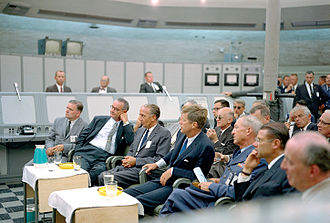
Operation Paperclip was a secret United States intelligence program in which more than 1,600 German scientists, engineers, and technicians were taken from former Nazi Germany to the US between 1945 and 1959 for government employment after the end of World War II in Europe; several were confirmed to be former members of the Nazi Party, including the SS or the SA.
READ MORE ON WIKIPEDIASYNONYMS & ALIASES
- Periapsis kick
- gravity assist efficiency
USAGE NOTE
Crucial for deep-space missions, where propulsive maneuvers are performed at periapsis to maximize delta-v.
DEVELOPERS
Organizations developing technology related to Oberth Effect.
Develops high-thrust rocket engines like Merlin and Raptor. The efficiency of interplanetary missions for their Starship and Falcon rockets relies heavily on performing powerful engine burns deep within a planet's gravity well to maximize the Oberth effect for orbital insertion and departure.
As a primary center for robotic space exploration, JPL designs complex interplanetary trajectories that are fundamentally based on principles like the Oberth effect. They specialize in using powered gravity assists, where a spacecraft performs a high-thrust burn at its closest approach to a planet to gain maximum kinetic energy.
A leading manufacturer of high-performance liquid rocket engines, such as the RL10, which is used on the upper stages of rockets like ULA's Vulcan Centaur. These engines are designed for the high-thrust, in-space burns required to efficiently execute maneuvers that capitalize on the Oberth effect for planetary missions.
ULA's Centaur V upper stage is a workhorse for sending national security and scientific payloads into high-energy orbits and interplanetary trajectories. Mission planners for ULA's Vulcan rocket rely on the Oberth effect to design the most fuel-efficient paths for these missions.
In partnership with DARPA and NASA, Lockheed Martin is developing the DRACO (Demonstration Rocket for Agile Cislunar Operations) spacecraft, which uses a nuclear thermal propulsion (NTP) engine. NTP provides high thrust and high efficiency, a combination ideal for leveraging the Oberth effect for rapid interplanetary travel.
Develops the Photon spacecraft, an in-space satellite bus designed for orbital transfers and interplanetary missions. Photon's mission profiles, like the CAPSTONE mission to the Moon, require precise engine burns at optimal points in orbit (perigee) to efficiently change its trajectory, directly applying the Oberth effect.
ESA designs and operates complex scientific missions throughout the solar system, such as JUICE (JUpiter ICy moons Explorer) and BepiColombo. The trajectories for these missions involve numerous gravity assists combined with precisely timed engine burns at periapsis to maximize energy gain, a textbook application of the Oberth effect.
Developing high-thrust engines like the BE-4 and the BE-3U for its New Glenn orbital rocket. These powerful engines will enable high-energy missions, including lunar and deep space exploration, which require efficient orbital mechanics and propulsive maneuvers that take advantage of the Oberth effect.