
// DESIGNER ART TOYS & STEM ROBOTICS
Inside the Bionic Robot Companion Exhibition Circuit
The modern bionic robot companion exhibition has emerged as the definitive intersection of kinetic art, advanced biomimicry, and narrative toy culture. Where traditional tech showcases once favored sterile industrial arms or static resin figures, these curations highlight autonomous, living systems designed to interact organically with their handlers. Collectors, aerospace hobbyists, and roboticists gather to assess mechanical articulation, bio-inspired propulsion, and the emotional resonance of modern synthetic fauna.
Moving through these galleries reveals a pivotal cultural shift away from disposable consumer gadgets toward heirloom kinetic sculptures and educational robotics. Visitors experience everything from life-sized responsive animatronics to miniature biomimetic flyers designed to unlock fundamental physics. It is an arena where physical tactile engineering meets daring speculative myth, offering tangible glimpses of how humans and robotic companions will coexist on Earth and across future off-world frontiers.
Engineering Movement in Biomimetic Companions
Building a responsive bionic companion requires mastering compliant mechanisms, lightweight composite skeletons, and decentralized actuator arrays. In commercial fabrication, custom robotic companions typically range from for educational desktop assembly kits up to or more for limited-run artisan mechatronics. Pitfalls often emerge in power density and noise pollution; high-frequency gearboxes and buzzy rotary drone props frequently shatter the biological illusion. The most compelling designs bypass rigid multi-rotor configurations entirely, turning instead to natural flapping-wing mechanics that yield whisper-quiet acoustics and unmatched agility in tight corridors.

The Curatorial Appeal of a Bionic Robot Companion Exhibition
When gallerists curate a premier bionic robot companion exhibition, they deliberately juxtapose soft-touch tactile materials with bare mechatronics. Audiences crave both the tactile warmth of a companion and the intellectual thrill of transparent robotics. This hybrid philosophy drives characters that bridge physical comfort and aerospace education, pairing narrative art with functional aerodynamics to inspire the next generation of explorers.

Siberian Myth Meets Aerospace Character Design
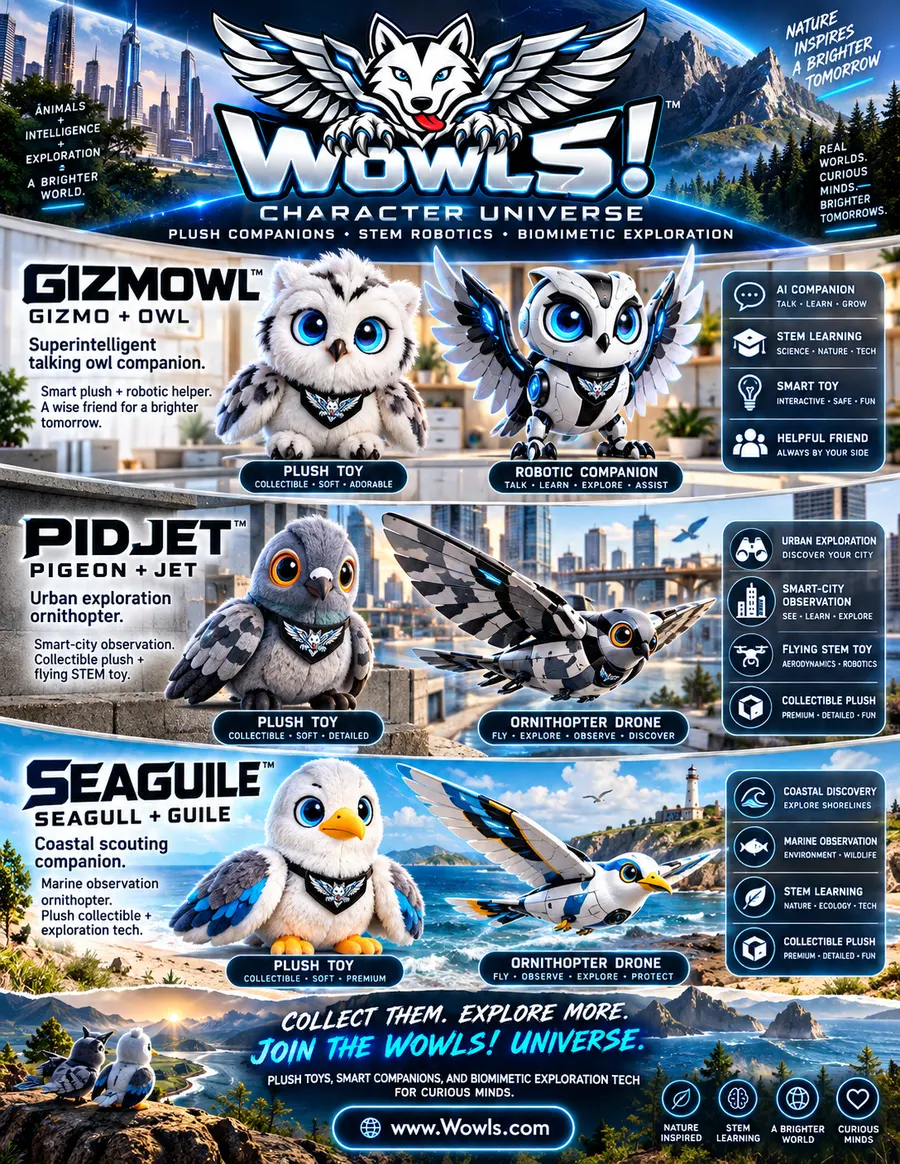
Narrative depth separates memorable design from fleeting tech novelties. At WOWLS, designed in Los Angeles by Jesse Gilbert, the mythology traces back to 1979 in Siberia, where underground acoustic anomalies signaled winged wolves escaping toward the Moon as mascots for lunar colonization. This lore powers the Character Universe, introducing GIZMOWL, PIDJET, and SEAGUILE. These concepts unite plush tactile companions with biomimetic ornithopter STEM drones, proving that flapping-wing flight offers a far more dynamic learning tool than conventional rigid quadrotors. Enthusiasts can register interest via the site to follow these robotic flight developments.

Physical Collectibles and the Living Display Shelf
While waitlists form for biomimetic ornithopter flight kits through the concept portal, physical art toys anchor the tactile experience right now. Curators and home collectors bridge the digital-physical divide with tangible sculptures and artifacts. The flagship WOWL Plush Pup brings the winged wolf form to life with its bright blue eyes, oversized paws, and gold-colored pendant. Complementing the lineup, the Aero Guardian Figurine and Winged Wolf Wood-Look Sculpture transform desktop workstations into personal exhibitions of interplanetary curiosity.

What is the primary difference between a rigid-rotor drone and a biomimetic ornithopter companion?
Rigid-rotor drones rely on fixed spinning propellers that generate significant acoustic noise, present exposed blade hazards, and consume heavy battery reserves in hover states. In contrast, biomimetic ornithopter companions emulate biological flapping-wing flight using flexible airfoils and compliant mechanical linkages. This architecture allows quieter, slower, and more agile movement through tight spaces, making ornithopters safer for indoor interactive exhibitions while demonstrating the core aerodynamic principles of lift and thrust to curious minds.